More insights.

SUBSCRIBE TO OUR NEWSLETTER.
Where the COLLAB team shares updates on our latest projects, industry milestones, and expert insights into the rapidly evolving creator economy, brand innovation, and cultural trends shaping consumer behaviour.
Creators arrive with ideas that make perfect sense in their world. They want something energising but calm. Healthy but indulgent. Clean, but still tasting unreal. Ideally ready for retail, globally compliant and shelf-stable for a year. In content, those things coexist effortlessly. In product development, they tend to fight each other.
My job as Chief Innovation Officer isn’t just beverage formulation.
It’s translation. I sit between personality and physics, between what a creator believes their product should feel like and what ingredients are physically capable of doing at scale.
There’s a moment in the film Holes where something breaks and the character Sam simply says, “I can fix that.” That’s basically the R&D role in creator-led brands.
Not “that won’t work.”
Not “the factory said no.”
Just “okay, let’s figure out how to make it true.”
Because in 2026, you can’t just put a name on a drink and expect reach alone to carry it anymore. The audience doesn’t passively consume products; they audit them. They read labels, compare behaviours and notice inconsistencies faster than most brands notice their own sales drop.
If a wellness creator releases something full of ingredients they publicly avoid, people feel it instantly. If a performance focused personality launches something nutritionally misaligned, the disconnect shows up in the second purchase, not the first.
That’s why authenticity isn’t marketing language anymore. It’s a formulation requirement. When we start product development at COLLAB, we don’t begin with flavour. We start with a much simpler question: would this feel wrong if it existed? If a product feels off before we’ve even tasted it, no amount of branding fixes that later. The ingredients, the function, even the sweetness system have to make sense for the person behind it.
How creators develop their own beverage formulas.
People often ask how creators actually develop their own beverage formulas. The honest answer is: they don’t start with formulas. They start with identity. Our job is converting that identity into a sensory experience. We look at how they live, what they consume, how they present energy, what their audience expects to see in their hand without questioning it. From there we build flavour profiling looking at acidity, mouthfeel, sweetness curve, finish, all designed to feel instinctively aligned.
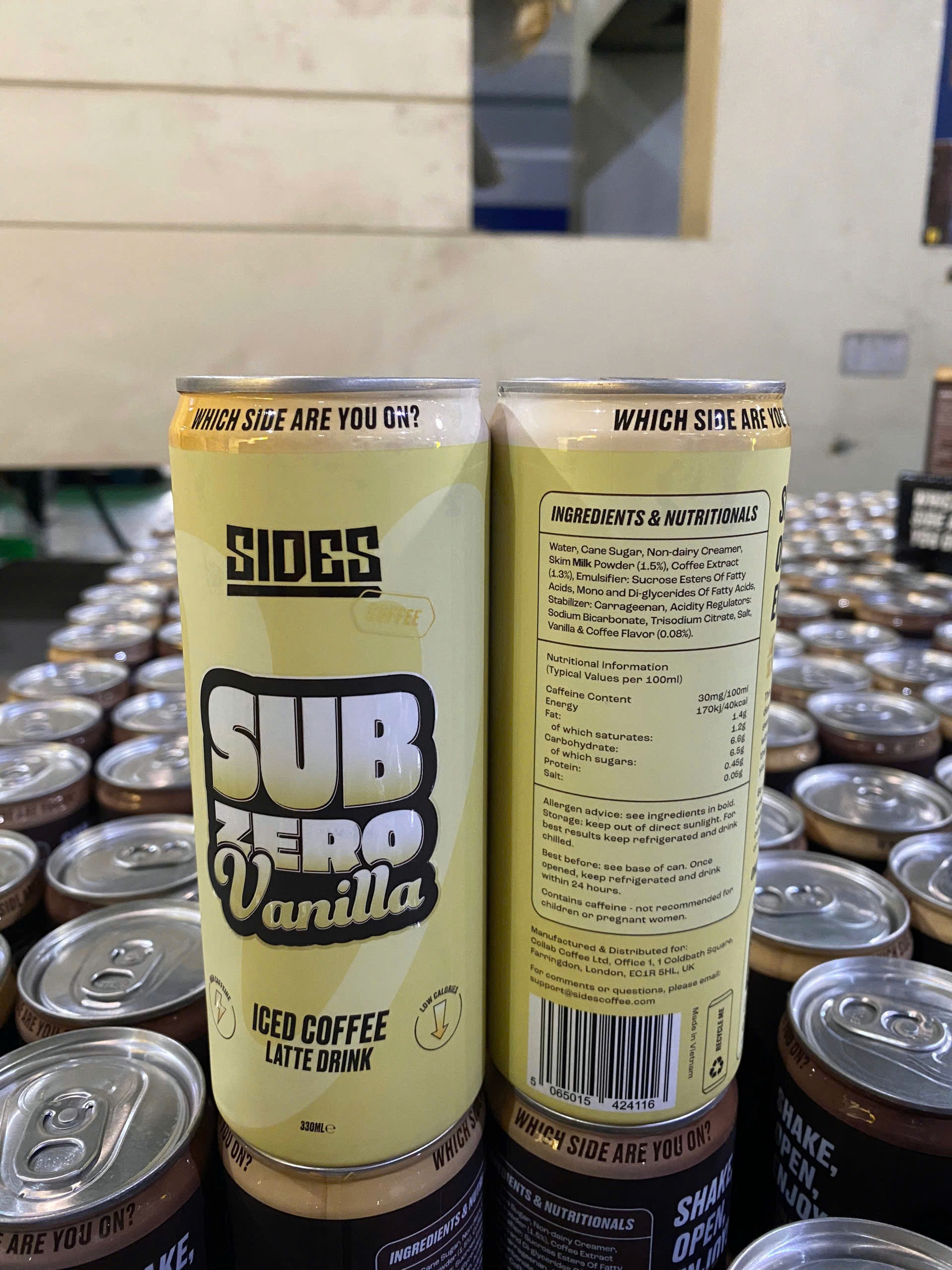
Working on the RTD iced coffee for SIDES was a good example of that alignment in practice. The brief wasn’t “make a coffee”, it was to make something that felt like SIDES, high energy, indulgent, slightly chaotic but still intentional. That influenced everything. We leaned into a fuller body, dessert-style flavour profiles and a more immediate sweetness curve rather than a slow speciality-coffee finish, because the product needed to match the same moment as the brand, social, loud and rewarding, not contemplative. Even the colour and visual weight of the can mattered as much as the formulation, because if the drink felt restrained or minimal it would contradict the personality holding it. The goal wasn’t nutritional optimisation, it was recognisable behaviour in liquid form, and the product only worked once it felt like something the audience expected to see in their hand before they’d even tasted it.
Only after this initial step do we start to optimise for manufacturing, compliance and scalability.
The Role of R & D in Creator Led Commerce
When it comes to R&D in creator commerce, the role is mostly protecting the vision from reality without breaking either. Creators operate at internet speed. They see an ingredient trending on Tuesday and want it in production on Thursday. But ingredients have supply chains, regulations and chemical behaviours that don’t care about engagement rates. Some compounds degrade with heat. Others destabilise in carbonation. Some simply don’t exist in consistent volume yet.
Sweeteners are usually where this friction becomes most visible. I’m often asked for monk fruit because they’ve heard it described as the “clean” alternative to erythritol or sucralose. In practice, the form that tastes closest to sugar is the purified extract, which isn’t typically approved for use as a sweetener within UK or EU regulations, while the compliant juice concentrate brings a heavy fruit note that reshapes the entire flavour profile. So the decision stops being about swapping one ingredient for another and becomes about protecting the promise. Do we change the flavour architecture to suit the ingredient, or redesign the sweetness system to achieve the same perception differently? That’s the real R&D work, not choosing ingredients people recognise, but engineering the experience they expect without breaking regulation, stability or taste. This is usually where I end up doing the Sam from Holes routine again.
The answer can’t be no, it has to be “here’s how we achieve the same outcome differently.”
This means, maybe we redesign the delivery system. Maybe we source differently. Innovation isn’t choosing between creativity and chemistry; it’s resolving the argument between them.
Aligning a product with a creator’s values is also far more literal than most people think. Ingredient sourcing becomes part of brand storytelling whether you mention it or not. Sweetener choice communicates intent. Functional claims create expectation. If the product quietly contradicts the creator’s positioning, the audience picks it up subconsciously long before they articulate it publicly.
And then the numbers follow.
A viral launch is relatively easy. A second purchase is difficult.
Social media can generate extraordinary day-one demand. It cannot generate loyalty if the product under-delivers in real life. People might support a creator once. They only build habits around products that fit naturally into their routine.
That’s why we design for drink number seven, not purchase number one.
Customer lifetime value in creator-led brands is almost entirely formulation driven. Does it taste good enough to crave? Does it behave consistently? Does it deliver the feeling it promised? If yes, the brand compounds. If not, the hype graph looks impressive for about three weeks.
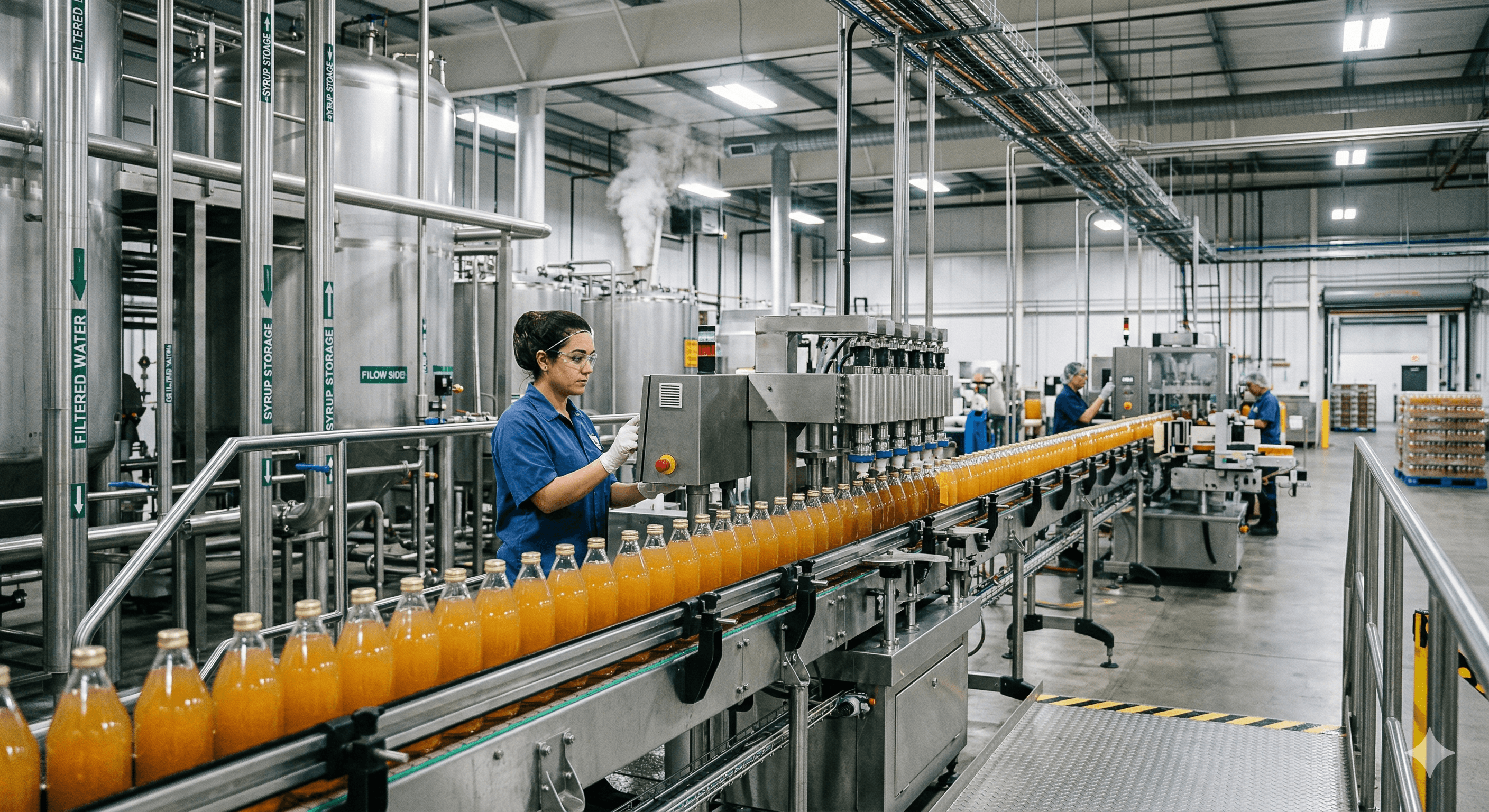
Working with formulation, compliance, packaging and manufacturing under one roof lets us move at the pace creators expect without sacrificing technical discipline. When a creator wants to tweak something, we can assess cost, regulatory impact and production feasibility immediately. That speed doesn’t just accelerate launches, it protects authenticity because compromises are solved early instead of hidden late.
The most successful creator products don’t feel like merchandise.
The most successful creator products feel inevitable. When someone picks it up, their reaction shouldn’t be surprise. It should be recognition.
That’s what modern product development actually is. Not just chemistry, not just branding but engineering belief into something you can hold. And most days my role is simply to make sure that when a creator says, “I want this to exist,” the final answer can honestly be:
“Yeah, we can fix that.”
Creators arrive with ideas that make perfect sense in their world. They want something energising but calm. Healthy but indulgent. Clean, but still tasting unreal. Ideally ready for retail, globally compliant and shelf-stable for a year. In content, those things coexist effortlessly. In product development, they tend to fight each other.
My job as Chief Innovation Officer isn’t just beverage formulation.
It’s translation. I sit between personality and physics, between what a creator believes their product should feel like and what ingredients are physically capable of doing at scale.
There’s a moment in the film Holes where something breaks and the character Sam simply says, “I can fix that.” That’s basically the R&D role in creator-led brands.
Not “that won’t work.”
Not “the factory said no.”
Just “okay, let’s figure out how to make it true.”
Because in 2026, you can’t just put a name on a drink and expect reach alone to carry it anymore. The audience doesn’t passively consume products; they audit them. They read labels, compare behaviours and notice inconsistencies faster than most brands notice their own sales drop.
If a wellness creator releases something full of ingredients they publicly avoid, people feel it instantly. If a performance focused personality launches something nutritionally misaligned, the disconnect shows up in the second purchase, not the first.
That’s why authenticity isn’t marketing language anymore. It’s a formulation requirement. When we start product development at COLLAB, we don’t begin with flavour. We start with a much simpler question: would this feel wrong if it existed? If a product feels off before we’ve even tasted it, no amount of branding fixes that later. The ingredients, the function, even the sweetness system have to make sense for the person behind it.
How creators develop their own beverage formulas.
People often ask how creators actually develop their own beverage formulas. The honest answer is: they don’t start with formulas. They start with identity. Our job is converting that identity into a sensory experience. We look at how they live, what they consume, how they present energy, what their audience expects to see in their hand without questioning it. From there we build flavour profiling looking at acidity, mouthfeel, sweetness curve, finish, all designed to feel instinctively aligned.
Working on the RTD iced coffee for SIDES was a good example of that alignment in practice. The brief wasn’t “make a coffee”, it was to make something that felt like SIDES, high energy, indulgent, slightly chaotic but still intentional. That influenced everything. We leaned into a fuller body, dessert-style flavour profiles and a more immediate sweetness curve rather than a slow speciality-coffee finish, because the product needed to match the same moment as the brand, social, loud and rewarding, not contemplative. Even the colour and visual weight of the can mattered as much as the formulation, because if the drink felt restrained or minimal it would contradict the personality holding it. The goal wasn’t nutritional optimisation, it was recognisable behaviour in liquid form, and the product only worked once it felt like something the audience expected to see in their hand before they’d even tasted it.
Only after this initial step do we start to optimise for manufacturing, compliance and scalability.
The Role of R & D in Creator Led Commerce
When it comes to R&D in creator commerce, the role is mostly protecting the vision from reality without breaking either. Creators operate at internet speed. They see an ingredient trending on Tuesday and want it in production on Thursday. But ingredients have supply chains, regulations and chemical behaviours that don’t care about engagement rates. Some compounds degrade with heat. Others destabilise in carbonation. Some simply don’t exist in consistent volume yet.
Sweeteners are usually where this friction becomes most visible. I’m often asked for monk fruit because they’ve heard it described as the “clean” alternative to erythritol or sucralose. In practice, the form that tastes closest to sugar is the purified extract, which isn’t typically approved for use as a sweetener within UK or EU regulations, while the compliant juice concentrate brings a heavy fruit note that reshapes the entire flavour profile. So the decision stops being about swapping one ingredient for another and becomes about protecting the promise. Do we change the flavour architecture to suit the ingredient, or redesign the sweetness system to achieve the same perception differently? That’s the real R&D work, not choosing ingredients people recognise, but engineering the experience they expect without breaking regulation, stability or taste. This is usually where I end up doing the Sam from Holes routine again.
The answer can’t be no, it has to be “here’s how we achieve the same outcome differently.”
This means, maybe we redesign the delivery system. Maybe we source differently. Innovation isn’t choosing between creativity and chemistry; it’s resolving the argument between them.
Aligning a product with a creator’s values is also far more literal than most people think. Ingredient sourcing becomes part of brand storytelling whether you mention it or not. Sweetener choice communicates intent. Functional claims create expectation. If the product quietly contradicts the creator’s positioning, the audience picks it up subconsciously long before they articulate it publicly.
And then the numbers follow.
A viral launch is relatively easy. A second purchase is difficult.
Social media can generate extraordinary day-one demand. It cannot generate loyalty if the product under-delivers in real life. People might support a creator once. They only build habits around products that fit naturally into their routine.
That’s why we design for drink number seven, not purchase number one.
Customer lifetime value in creator-led brands is almost entirely formulation driven. Does it taste good enough to crave? Does it behave consistently? Does it deliver the feeling it promised? If yes, the brand compounds. If not, the hype graph looks impressive for about three weeks.
Working with formulation, compliance, packaging and manufacturing under one roof lets us move at the pace creators expect without sacrificing technical discipline. When a creator wants to tweak something, we can assess cost, regulatory impact and production feasibility immediately. That speed doesn’t just accelerate launches, it protects authenticity because compromises are solved early instead of hidden late.
The most successful creator products don’t feel like merchandise.
The most successful creator products feel inevitable. When someone picks it up, their reaction shouldn’t be surprise. It should be recognition.
That’s what modern product development actually is. Not just chemistry, not just branding but engineering belief into something you can hold. And most days my role is simply to make sure that when a creator says, “I want this to exist,” the final answer can honestly be:
“Yeah, we can fix that.”